Inside the Incident Response Playbook: Tools, Teams, and Tactics That Work
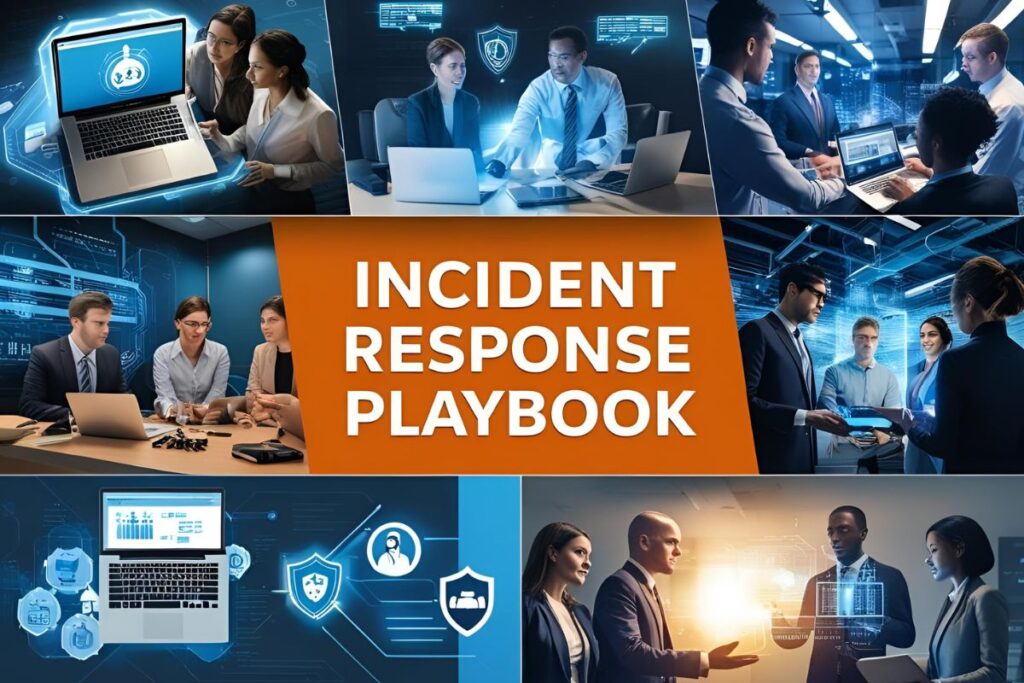
In the current cybersecurity landscape, incidents are no longer a question of “if,” but “when.” The speed, coordination, and effectiveness of a company’s response can make the difference between a contained breach and a catastrophic compromise. An Incident Response (IR) playbook is not just a theoretical document—it is a dynamic, actionable framework that integrates people, processes, and technology to neutralize threats, minimize damage, and restore normal operations.
This article explores the essential components of a high-functioning IR playbook: the tools that provide visibility and control, the team structures that drive response, and the tactical methodologies that enable real-world success.
The Purpose of an Incident Response Playbook
An IR playbook is designed to guide security teams through the lifecycle of a cyber incident, from initial detection to post-incident review. It standardizes response protocols for different threat scenarios—ransomware, insider threats, DDoS attacks, data breaches—ensuring a consistent and effective approach under pressure.
Beyond checklists, a mature playbook includes:
-
Clearly defined roles and responsibilities
-
Automated workflows for common attack vectors
-
Escalation paths and communication guidelines
-
Regulatory and compliance obligations
-
Lessons-learned integration for continuous improvement
Building the Team: Roles and Responsibilities
Incident response is a multidisciplinary effort requiring collaboration across technical, legal, and business units. A strong IR team includes:
1. Incident Commander
The central authority during an incident, responsible for managing the response, making real-time decisions, and coordinating with stakeholders.
2. Security Analysts and Threat Hunters
These team members perform triage, analyze attack vectors, contain threats, and recover systems. They rely heavily on forensic tools, endpoint telemetry, and threat intelligence.
3. IT and Infrastructure Support
Essential for isolating affected systems, restoring backups, and implementing firewall or network segmentation changes.
4. Legal and Compliance
They assess regulatory exposure (e.g., GDPR, HIPAA), manage disclosure requirements, and support evidence preservation.
5. Public Relations and Executive Leadership
Responsible for managing external communications, stakeholder confidence, and reputational risk.
The effectiveness of these roles hinges on pre-established coordination and clearly documented responsibilities within the playbook.
Core Tools of Effective Incident Response
The response toolkit is as important as the playbook itself. Key technologies include:
1. Security Information and Event Management (SIEM)
SIEM platforms like Splunk, QRadar, or Sentinel aggregate and correlate logs from across the enterprise to surface potential incidents.
2. Endpoint Detection and Response (EDR)
Tools such as CrowdStrike, SentinelOne, and Microsoft Defender for Endpoint offer visibility into endpoint behavior, enabling rapid containment and remediation.
3. Network Detection and Response (NDR)
Solutions like Darktrace or ExtraHop detect lateral movement and anomalous network activity often missed by traditional defenses.
4. Digital Forensics and Analysis
Toolkits such as EnCase, FTK, and Volatility allow analysts to examine system images, memory dumps, and log files for root cause analysis and evidence collection.
5. Threat Intelligence Platforms
Integrations with MITRE ATT&CK, MISP, or commercial feeds help contextualize indicators of compromise (IOCs) and understand adversary tactics, techniques, and procedures (TTPs).
6. Orchestration and Automation (SOAR)
Platforms like Palo Alto’s Cortex XSOAR or Splunk SOAR automate common tasks—log collection, alert enrichment, ticketing—freeing analysts for higher-level decision-making.
Incident Response Lifecycle: Tactics That Work
A successful IR playbook follows a structured lifecycle. Each phase requires distinct actions and expertise.
1. Preparation
The foundation of the response effort. Includes establishing policies, testing playbooks, running tabletop exercises, and maintaining up-to-date asset inventories and access controls.
Best Practice: Simulate ransomware and phishing scenarios regularly to test decision-making and communications protocols.
2. Detection and Analysis
Rapid, accurate detection is critical. Analysts triage alerts, identify false positives, and determine scope. Threat intelligence and behavioral analytics are essential for speed and precision.
Key Metric: Mean time to detect (MTTD) should be measured and continuously improved.
3. Containment, Eradication, and Recovery
Based on the threat type and severity, the team must isolate affected systems, remove malicious components, and begin recovery. Containment may be short-term (isolating endpoints) or long-term (network reconfiguration).
Tactical Consideration: Avoid tipping off adversaries too early during containment to preserve forensic data and monitor behavior.
4. Post-Incident Activity
The most neglected phase in many organizations. A formal post-mortem must include:
-
Timeline reconstruction
-
Lessons learned
-
Policy and playbook updates
-
Reporting to executives, regulators, or stakeholders as needed
Goal: Convert an incident into a capability improvement opportunity.
Integrating IR with Business Continuity and Legal Obligations
An incident response playbook cannot operate in isolation. It must be aligned with broader business continuity, disaster recovery (BC/DR), and legal frameworks. IR teams should collaborate with business continuity managers to ensure system dependencies and recovery priorities are reflected in playbook design.
Further, data breach notification laws differ by jurisdiction. Legal counsel must be integrated early into response workflows to assess liability, manage communication timing, and protect privileged communications during litigation.
Common Pitfalls and How to Avoid Them
-
Over-reliance on automation: Automation can assist, but human judgment remains crucial, especially during novel or targeted attacks.
-
Lack of role clarity: Confusion about who owns which part of the response delays containment and increases risk.
-
Infrequent testing: A playbook that is not exercised regularly will fail when most needed.
-
Poor communication: Internal and external communication breakdowns can damage trust, morale, and regulatory standing.
Conclusion
Incident response is not a static checklist—it is an organizational discipline that requires readiness, agility, and precision. A well-structured IR playbook bridges strategy with execution, enabling security teams to respond decisively in moments of crisis. By investing in the right people, equipping them with effective tools, and rehearsing the tactics that align with real-world threats, organizations can transform cyber incidents from existential threats into manageable events.
The best IR programs do not aim for perfection but for continuous improvement. In a threat landscape defined by speed and complexity, a resilient, practiced response capability is the most powerful defense.